
Process mining in banking helps financial institutions improve operational efficiency, reduce compliance risks, optimize loan processes, and enhance customer journeys. For banks managing millions of transactions, process mining provides visibility into bottlenecks, inefficiencies, and revenue leaks hidden inside operational data.
When Erste Bank Poland separated from Santander Group in early 2026, the transition triggered a full technology realignment — including the replacement of its existing process mining platform.
In this article, you’ll learn:
-
Why banks migrate process mining platforms
-
How Erste Bank uncovered a 37% loan application drop-off rate
-
Why on-premise deployment matters in banking
-
How unlimited licensing supports enterprise-wide process improvement
The Context: A Migration Nobody Wanted — but Nobody Could Avoid
Migrating process mining software in banking is rarely just a technical decision. It affects compliance, operational visibility, and business continuity.
Erste Bank Poland had been building process mining capability for years. The platform they were using was not failing. It was working. But three structural realities made switching unavoidable.
1. Technology Independence in Banking
After separating from Santander Group, the bank needed full ownership of its technology stack — its infrastructure, its tooling, and its own roadmap for process improvement. A vendor relationship tied to a former parent group’s ecosystem was no longer viable.
2. Scalable Process Mining Economics
The previous platform’s pricing was structured around individual use cases. Every new process you wanted to analyze came with a new budget line. For a bank trying to scale process mining across lending, onboarding, compliance, and customer journeys, that model was a ceiling masquerading as a pricing plan.
With per-use-case pricing, scaling process mining becomes slower and more expensive. Unlimited licensing removed that barrier.
3. On-Premise Process Mining for Compliance
As a regulated financial institution, Erste Bank Poland required an on-premise deployment.
Data sovereignty wasn’t a preference — it was a legal and regulatory obligation.
Previously, customer data had to be anonymized before being sent to a cloud environment. That created friction, limitation, and residual compliance risk. An on-premise solution eliminated all three.
This type of process mining migration is increasingly common in banking as institutions modernize their technology stack and seek greater data sovereignty.
The Real Risk Was Never Technical
Anyone who has been through an enterprise system migration knows the real danger is rarely the technology itself. Software and data can be migrated. What cannot be easily rebuilt is trust.
The Erste Bank Poland team had spent years developing trusted process views, embedded KPI frameworks, and a community of business users who had learned to rely on process mining insights for real decisions.
A migration that disrupted their access, changed the experience, or broke familiar workflows could undo all of that — regardless of how technically superior the new platform was.
This insight shaped everything about how the migration was executed. The project was led as a business initiative, not an IT project.
Every decision was filtered through a single question: does this protect the value we’ve already created?
Why Erste Bank Chose QPR Software’s QPR ProcessAnalyzer for Banking Process Mining
After evaluating their options, Erste Bank Poland selected QPR ProcessAnalyzer, deployed on-premise. The decision was driven by four capabilities that aligned directly with the bank’s strategic requirements:
-
•On-premise deployment for full data sovereignty, security compliance, and direct analysis of unanonymized customer data
-
Unlimited licensing enabling process mining to expand across business units without per-use-case cost barriers
-
Faster, more accessible dashboard creation with predefined KPI components that business users could work with independently
-
Flexibility to build custom analytical views — including the sales funnel dashboard that ultimately uncovered millions in hidden revenue
-
Custom analytics for loan funnel analysis, customer journey bottlenecks, and abandoned applications
The on-premise deployment did introduce new responsibilities: infrastructure management, IT administration, and internal capability requirements that cloud solutions abstract away.
The team acknowledged these trade-offs clearly. Some advanced out-of-the-box analytics features from the previous platform were not replicated. But as they noted, many of those features had seen limited use in practice — while the gains in data control, cost flexibility, and scalability proved far more valuable.
How Process Mining Improved Banking Operations Across the Organization
Faster, More Accessible Insights
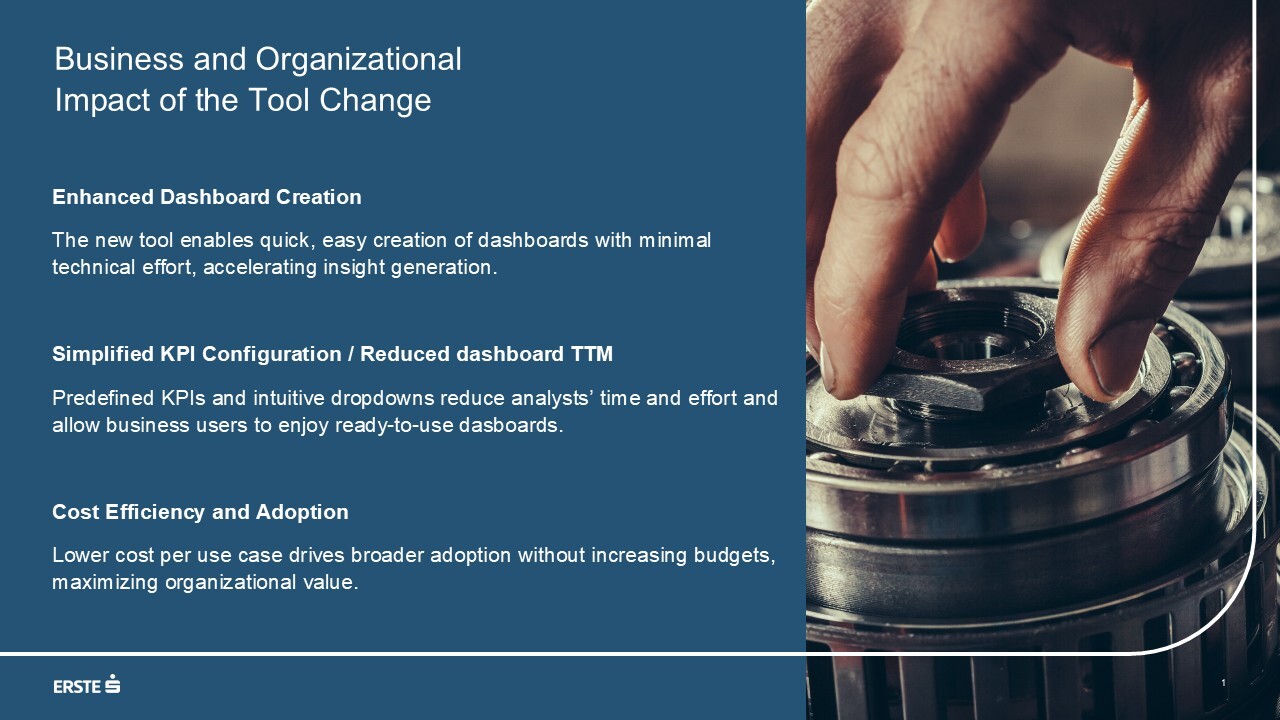
After the migration, dashboards became faster to create and less dependent on technical expertise. Business users could engage with process data independently — without routing every analysis through a specialist team.
The Economic Shift
Unlimited licensing changed the economics of process mining. Teams no longer needed budget approval for every new use case, making experimentation faster and scaling easier across the organization.
How Process Mining Revealed a 37% Loan Application Drop-Off Rate
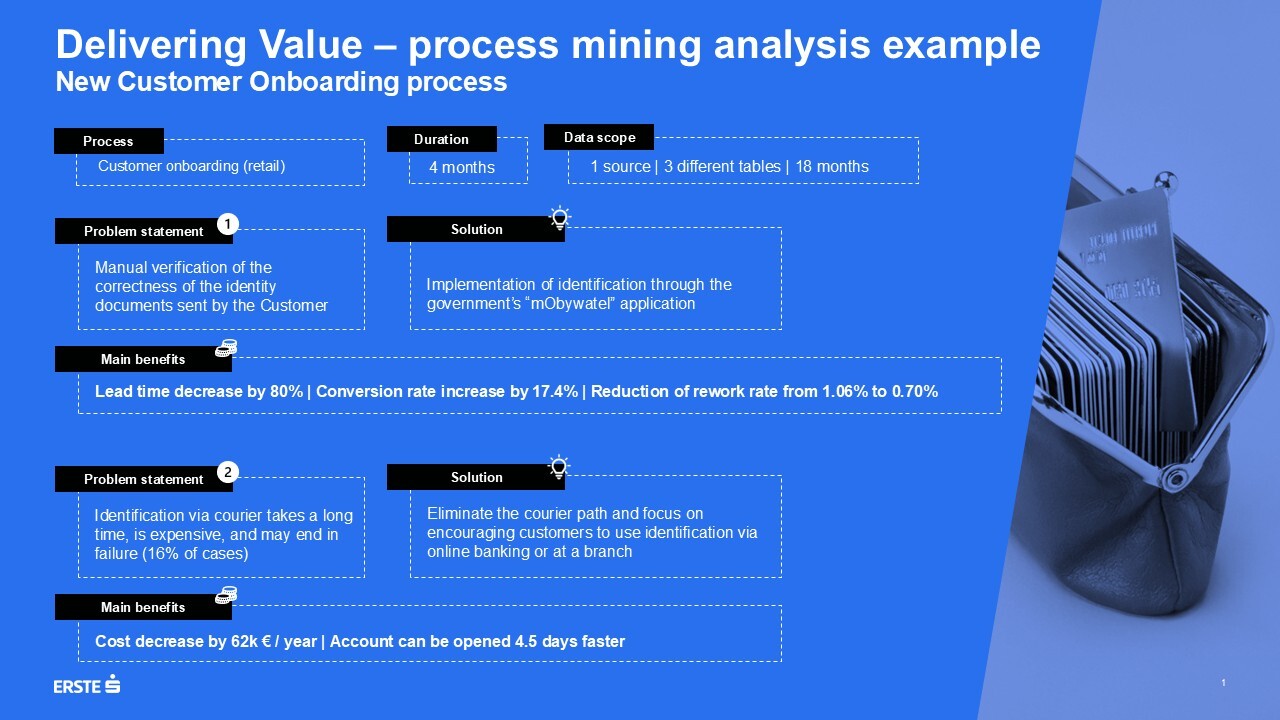
One of the most powerful demonstrations of QPR ProcessAnalyzer’s impact came from a custom sales funnel dashboard the team built to analyze digital lending.
The dashboard revealed that approximately 37% of customers who initiated a loan application were abandoning the process before completion.
Critically, these were not rejected applicants.
They were customers who had started the journey and disengaged — without the bank knowing why, or even knowing the scale of the problem.
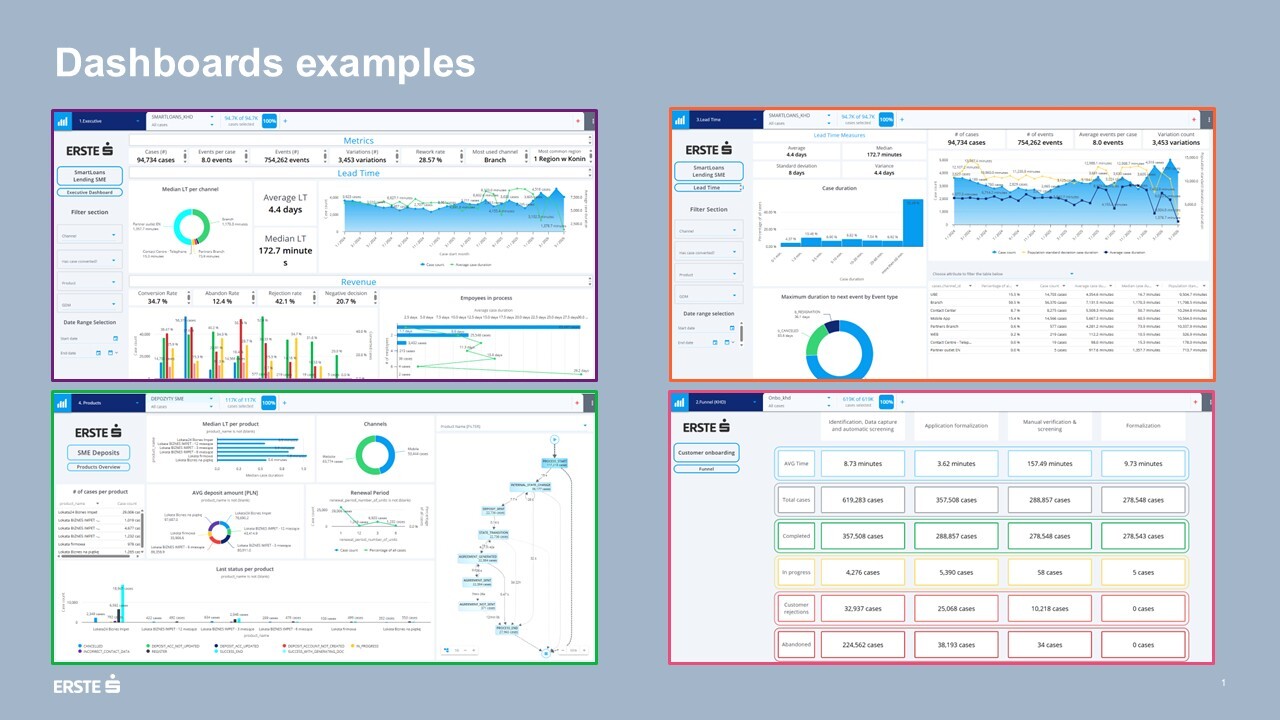
The team brought the finding to their business colleagues.
Together, they designed an intervention: identify abandoned applications and proactively contact those customers through the contact center, offering to help them complete the process.
The result was several million PLN in additional sales — value that had previously been invisible, sitting in the gap between the data the bank had and the questions it knew to ask.
The Cultural Shift: From Analysis to Decision-Making
Process mining in banking delivers the most value when insights directly support operational and customer-facing decisions.
Technical migrations are measured in dashboards migrated, data models rebuilt, and systems validated.
The Erste Bank Poland team measured something different: whether decisions were actually being made based on process mining insights.
Process mining at Erste Bank Poland is no longer a niche analytical capability used by specialists.
It has become a foundation for everyday management — a system that surfaces the right questions and supports better decisions across the organization.
Three Process Mining Migration Lessons for Banks and Enterprises
Erste Bank Poland’s journey contains lessons that extend well beyond banking.
Any organization considering a process mining migration — or evaluating whether its current platform is still the right fit — should pay attention to these three principles.
1. Continuity Is the Primary Success Criterion
The best migration strategy in the world fails if users lose access or trust.
Protecting continuity is not a soft concern or a user-experience nicety.
It is the central success criterion for any platform transition.
Treat it as such from day one.
2. Pricing Models Determine Scale
A platform that charges per use case will always limit how far process mining can reach inside your organization.
If every new process you want to analyze triggers a new budget conversation, you will never achieve genuine scale.
When evaluating process mining platforms, ask not just what it costs today — but what it costs to double your coverage next year.
3. Your Technology Partner Is Tested in the Difficult Moments
Erste Bank Poland was explicit in their acknowledgment of QPR’s role in their migration.
Responsive support, practical expertise, and genuine partnership during a complex transition are not features listed on a product comparison matrix — but they are often what determines whether a migration succeeds or fails.
Final Thought: The Tool That Asks Better Questions
For banks evaluating process mining platforms, the key question is no longer whether to use process mining — but how to scale it securely, economically, and across the entire organization.
Erste Bank Poland chose a different version. They chose a process mining platform that could grow alongside the organization — one that could reach beyond the expert team, into the hands of the business users who are closest to the processes that matter.
And by making that choice, they turned a forced migration into a strategic opportunity that delivered millions in recovered revenue and a cultural transformation that will compound for years.
FAQ
Can process mining reduce loan abandonment?
Yes. Process mining helps banks identify where customers abandon loan applications and why. In Erste Bank Poland’s case, it revealed a 37% drop-off rate in digital lending. By proactively contacting these customers, the bank recovered several million PLN in additional sales.
Is on-premise process mining better for banks?
For many banks, yes. On-premise process mining provides greater control over sensitive customer data, improves compliance, and strengthens data sovereignty. This makes it especially valuable in highly regulated industries like banking and insurance.
What is process mining in banking?
Process mining in banking is a data-driven way to analyze how financial processes actually work. It helps banks visualize workflows, identify bottlenecks, reduce inefficiencies, and improve customer journeys across areas like lending, onboarding, and compliance.
How can process mining improve loan conversions?
Process mining helps banks identify where customers drop off during the loan application process and what causes delays or friction. By uncovering these bottlenecks, banks can improve customer journeys, reduce abandonment, and increase conversions.
Why do banks choose on-premise process mining?
Banks choose on-premise process mining to keep sensitive data within their own infrastructure and meet strict regulatory requirements. This improves security, compliance, and flexibility in analyzing operational data.
What are the benefits of unlimited process mining licenses?
Unlimited licenses allow organizations to scale process mining across departments without extra cost per use case. This removes budget barriers, encourages experimentation, and helps embed process improvement across the business.
Optimizing the purchase-to-pay process with process mining

Best practices for deploying process mining in large organizations