How Meyer Turku Uses QPR ProcessAnalyzer to Navigate the Complexity of Modern Shipbuilding
Building one of the world's most advanced cruise ships is an extraordinarily complex operation. At Meyer Turku, thousands of people and more than 1,000 suppliers contribute to vessels that take years to design and build. Materials, services, plans and production activities all need to come together at the right place and at the right time.
Meyer Turku is using process modeling and process mining with QPR ProcessAnalyzer to make that complexity visible. By connecting data across the shipbuilding process, the company can see how the end-to-end business flow actually works — where bottlenecks emerge, how different activities influence one another and where improvement efforts will have the greatest impact.
The next step is to combine process modeling, process mining and AI into Process Intelligence, helping people move from assumptions personal opinions toward a fact-based understanding of what is really happening across the shipbuilding process.
The Challenge: Managing One of the World's Most Complex Production Environments
Shipbuilding complexity on a massive scale
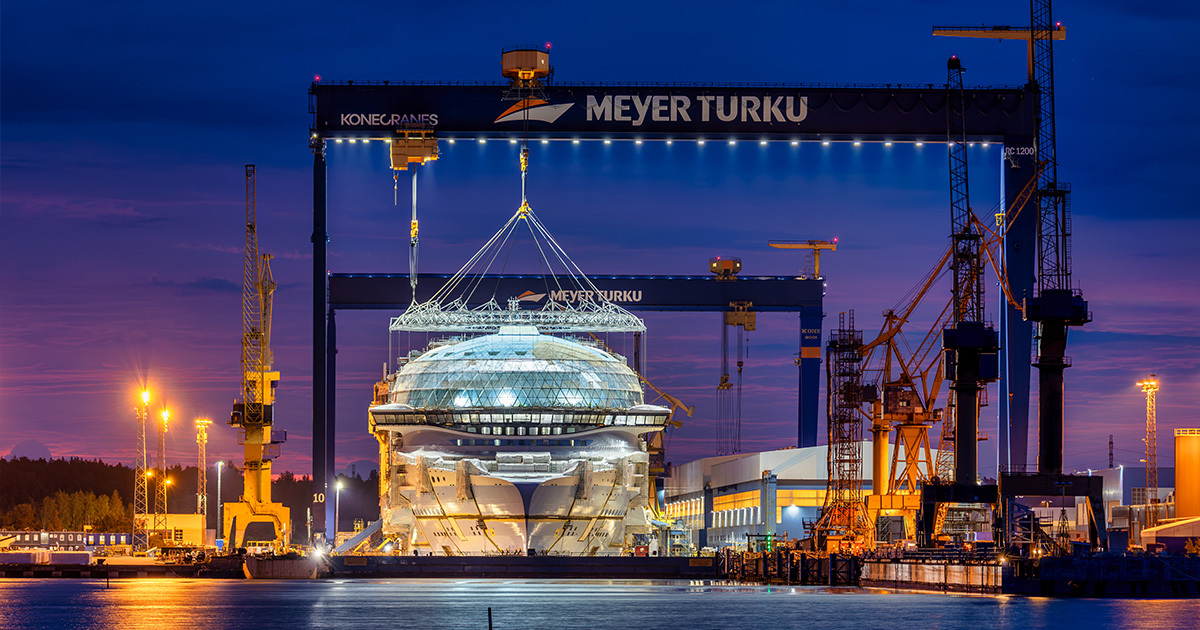
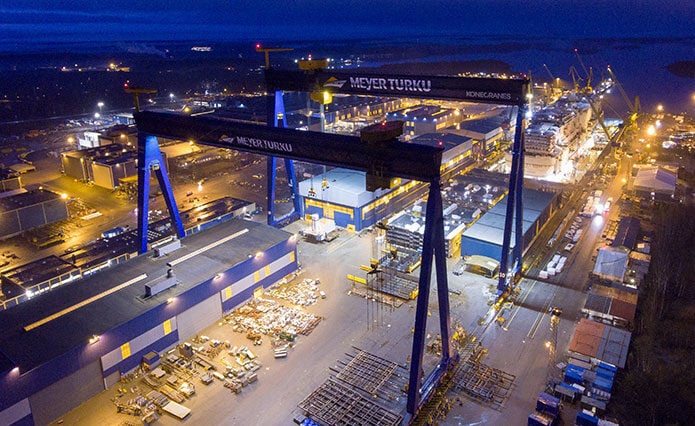
Meyer Turku designs and builds some of the world's largest and most advanced cruise ships. The shipyard has around 2,200 employees, while as many as 7,000 people may work at the site during peak periods. More than 1,000 suppliers contribute materials and services, creating a highly interconnected production environment.
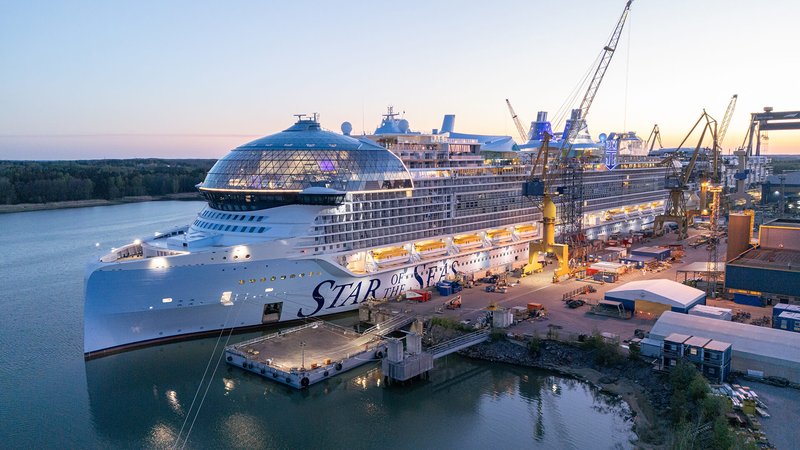
The scale is exceptional: a modern cruise ship is almost 400 metres long and contains roughly ten times as many parts as a large commercial aircraft. Meyer Turku typically has three vessels under construction at once, while delivering a completed ship about once a year.
The planning horizon is equally demanding, with an order book extending to 2030 and shipbuilding slots reserved as far out as 2036.
Deep expertise can also reinforce long-established assumptions
Shipbuilding in Turku has a history spanning around 300 years. That brings enormous expertise, but it also means processes, culture and ways of working have developed over generations.
When problems arise, discussions can easily be shaped by experience, assumptions and individual views. Meyer Turku wanted a fact-based way to see how work actually happens and where process issues really originate.
The Solution: Combining Process Modeling and QPR ProcessAnalyzer
Top-down process modeling meets bottom-up process mining
Meyer Turku combines process modeling with process mining to create a shared factual view of its operations.
Process modeling provides the top-down perspective: how key processes should work and how they align with company strategy.
QPR ProcessAnalyzer provides the bottom-up perspective by using transactional data to show how those processes actually operate in practice.
Together, these approaches give Meyer Turku a common basis for process development and help connect strategic process design with evidence from real operational data.
As the company's process work matured, executive-level process sponsors and process owners worked together to define Meyer Turku's highest-level processes and create a structure for further development.
“The real value comes from discussion, learning and aha moments.”
Kimmo Liukkonen
Head of Business Processes, Meyer Turku
The Results: End-to-End Visibility Across the Shipbuilding Process
1,000+
suppliers contributing materials and services
7,000
people working at the shipyard during peak periods
End-to-end
visibility from design and planning through procurement, receiving and invoicing
Fact-based
process improvement replacing assumptions and personal opinions
Meyer Turku first used process mining to visualize how work moves across its physical production network, helping the team identify bottlenecks and understand how different production areas interact.
The successful pilot created a foundation for expanding process mining into a broader end-to-end view of the shipbuilding flow.
Today, Meyer Turku is extending that visibility across design, planning, procurement, goods receiving and invoicing — creating a stronger basis for fact-based process improvement and more focused development efforts.
About Meyer Turku
Meyer Turku builds some of the world's largest and most advanced cruise ships at its shipyard in Turku, Finland.
Shipbuilding at the site has a history of around 300 years. Today, cruise ship construction combines enormous physical scale with an equally complex network of planning, engineering, procurement, production and supplier activities.
Building a single cruise ship typically takes around five years from start to finish, with the final year focused on outfitting and interior completion. Meyer Turku’s recent deliveries include Legend of the Seas, an Icon-class ship built for Royal Caribbean.
Successful delivery depends on thousands of interconnected activities being completed in the right sequence and at the right time.
The challenge
When Everything Depends on Everything Else
A cruise ship is not one process
Modern shipbuilding consists of multiple interconnected processes. Before production can begin, plans and designs must be completed. Those designs drive purchase requisitions, purchase orders and supplier selections.
Materials and services then need to arrive at the right time so that production personnel and components are available when and where they are needed. A delay in one part of this chain can affect what happens later.
Meyer Turku therefore needed visibility into how processes interact across the entire flow — not just how individual functions perform in isolation.
Traditional process boundaries hide dependencies
Looking separately at design, procurement or production can show what is happening inside an individual function. But in shipbuilding, some of the most important dependencies exist between those functions.
Was the design completed in time?
Did that affect the purchase requisition?
Was the purchase order submitted early enough for a long-lead-time component?
Did the material arrive when production needed it?
These are the kinds of dependencies that an end-to-end Process Intelligence view can make visible.
Opinions are not the same as process facts
In an environment with a long history and deep expertise, people naturally develop strong views about where problems originate.
Meyer Turku’s analysis has already challenged some of those assumptions. For example, the common belief that plans are always changing or late did not necessarily match what the process data showed.
Process mining replaces generalizations with evidence, helping teams focus improvement efforts on the areas where the data shows the greatest impact.
The solution
Creating One End-to-End View with QPR ProcessAnalyzer
Starting with the physical production network
Meyer Turku's initial process mining pilot took an unusual and highly practical approach.
The team incorporated physical production locations into the process view — different production halls and areas of the shipyard — and analyzed how work moved through this network.
This enabled Meyer Turku to see how the production network was functioning, where bottlenecks occurred and how different parts of production interacted.
The results created positive momentum and provided a natural foundation for scaling process mining into more complex use cases.
Moving to object-centric process mining
Shipbuilding is a natural environment for object-centric process mining because no single case identifier can fully represent what is happening.
Designs, plans, purchase requisitions, purchase orders, materials, receipts and invoices all interact as part of the same overall delivery.
Meyer Turku is therefore expanding its process mining approach to connect information across these related objects and processes.
The result is a much richer picture of the end-to-end business flow than could be achieved by analyzing individual processes in isolation.
From design all the way to invoicing
Meyer Turku's end-to-end view brings together data covering:
-
design
-
planning
-
purchase requisitions
-
purchase orders
-
goods receiving
-
invoicing
By connecting these stages, QPR ProcessAnalyzer can help reveal how events in one area influence what happens later in the process.
Pinpointing where improvement matters most
The objective is not simply to produce more process diagrams.
Meyer Turku can use the end-to-end analysis to identify exactly where challenges occur — while also seeing which parts of the process are already working well.
The analysis can then be narrowed further, for example to a particular product group or issue, allowing improvement teams to focus their attention where it can have the greatest impact.
“We can pinpoint exactly where we have challenges — and which parts are really working well.”
Kimmo Liukkonen
Head of Business Processes, Meyer Turku
The results
From Process Visibility to Process Intelligence
A shared factual view replaces assumptions
One of the most important outcomes is simple: Meyer Turku can see what is really happening.
Instead of process discussions being driven primarily by personal experience or assumptions, teams can use transactional data to understand how the process actually behaves.
This creates a stronger basis for dialogue, prioritization and process improvement.
End-to-end dependencies become visible
Connecting design, planning, procurement, receiving and invoicing provides a fundamentally different perspective from looking at each process individually.
Teams can see where a problem originates, what happened before it and how it affects later stages of the shipbuilding flow.
Improvement can focus on the highest-impact areas
The analysis shows both positive performance and bottlenecks.
This is important because process improvement is not about changing everything.
Meyer Turku's philosophy is to simplify, focus on what matters and direct attention to the areas where improvement will make the greatest difference.
Process mining supports strategic process development
Process development is no longer an isolated improvement activity.
Meyer Turku has incorporated processes directly into company strategy, with executive-level process sponsors and designated process owners helping define and develop the company's most important processes.
This connects process visibility with governance and business priorities.
The next step: combining modeling, mining and AI
Seeing the process is valuable — but Meyer Turku sees that as only one step.
Someone still needs to analyze the different views and understand what they mean.
The company's next stage is therefore to combine process modeling, process mining and AI into a broader Process Intelligence capability.
AI can help users ask questions of the process data, identify challenge areas and highlight the issues with the greatest potential impact.
This has the potential to make advanced process analysis easier to use in an environment where the underlying operational complexity is enormous.
“We are combining process modeling, process mining and AI to build this Process Intelligence.”
Kimmo Liukkonen
Head of Business Processes, Meyer Turku
Technology does not replace process expertise
Meyer Turku also emphasizes an important principle: technology alone does not create process improvement.
Process models, transactional data and process mining need to be combined with people who understand the business and can interpret what the analysis reveals.
Kimmo Liukkonen summarizes it simply: capable people who understand the process remain an essential ingredient.
Hear the Story Directly from Meyer Turku
Watch Meyer Turku's QPR Summit 2026 session to see how one of the world's most complex manufacturing environments is combining QPR process modeling, object-centric process mining and AI to build end-to-end Process Intelligence.
Ready to See Your Processes End to End?
See how QPR ProcessAnalyzer can connect process data across systems, reveal dependencies and bottlenecks, and help you focus improvement efforts where they matter most.
Frequently Asked Question
How does Meyer Turku use process mining?
Meyer Turku uses process mining to understand how its complex shipbuilding processes actually operate, identify bottlenecks and challenge assumptions about where problems originate. Its approach combines top-down process modeling with bottom-up analysis of transactional data.
Why is object-centric process mining useful in shipbuilding?
Shipbuilding involves many interconnected business objects and processes rather than one simple sequential flow.
Meyer Turku is using object-centric process mining with QPR ProcessAnalyzer to understand relationships across activities including design, planning, purchase requisitions, purchase orders, goods receiving and invoicing, creating a broader end-to-end view of how work progresses.
What processes does Meyer Turku analyze?
Meyer Turku’s end-to-end view includes design, planning, purchase requisitions, purchase orders, goods receiving and invoicing.
This helps Meyer Turku understand how different stages influence one another rather than analyzing each process separately.
How does Meyer Turku combine process modeling and process mining?
Process modeling provides the top-down view of how key company processes should operate, while process mining uses transactional data to show how work actually happens.
Meyer Turku combines the two approaches to create a shared understanding of processes and focus improvement efforts on the areas that matter most.
How is Meyer Turku using AI with process mining?
Meyer Turku is beginning to combine process modeling, process mining and AI into Process Intelligence. AI can support users in asking questions of process data, identifying challenge areas and understanding which issues may have the greatest impact.
What is the role of QPR ProcessAnalyzer at Meyer Turku?
QPR ProcessAnalyzer provides the process mining capabilities used to analyze end-to-end business flows, identify bottlenecks and explore how different activities and process objects interact across Meyer Turku's complex shipbuilding environment.